
What if we treated our politics the way we treat our national parks?
I recently gave a talk at Montana State University in which I asked the audience to think about how we would act if politics was more like a park than a sport. My remarks as written are below.
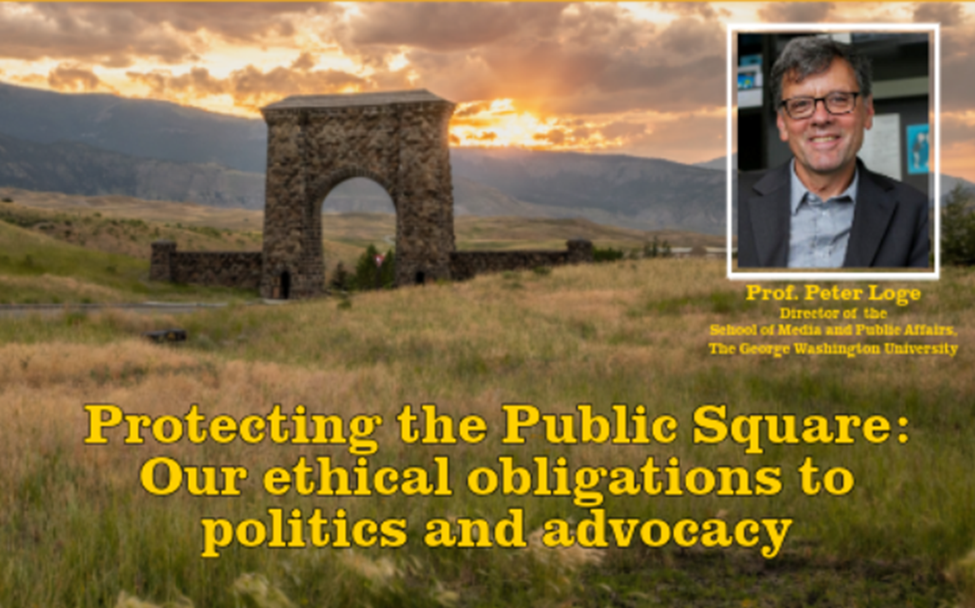
Thank you for inviting me to join you this evening and for the overly generous introduction. My bio, which correctly implies that I’m indoorsy, makes my presence here somewhat confusing. Hopefully I can clear up that confusion, maybe replacing it with a different confusing question, in our time together.
The question I want to raise this evening is, if you thought about our politics the way you think about parks and other open spaces, how would you behave? What if politics were a public place, not just something we do in public?
I don’t mean as in advocates creating political space into which they hope politicians will move, or safe spaces for honest dialogue, or all the other ways people in politics use space as a metaphor. But as in if politics were a place in nature, like Glacier National Park.
The question might seem absurd, after all politics isn’t a place like a mountain or strip mall, and while we sometimes think of politicians as animals we mostly mean that metaphorically. But we're all here now, and I imagine some of you may need to stay to the end to get extra credit in your classes, so you may as well hear me out.
National and state parks like Glacier National Park are real places, and there are fierce debates over their use. They are also idealized places captured in paintings by artists like James Moran and Albert Bierstadt. The idealized versions of Nature help inform public policy and our conceptions of our country. The American West is both a place, and an idea about a place.
As you heard from my bio, I spent a lot of time in the day-to-day of politics. I believe deeply in the promise of what our politics can be. For me, politics is both the reality of a campaign, and the ideal of the Burmidi's Apotheosis of Washington painted on the underside of the Capitol dome. Politics is a thing, and the idea of the thing.
We talk about political space a lot. Advocates create political space into which they hope politicians will move. We want safe spaces and spaces for honest debate. But what if we thought of space not as something politics is in, but rather as politics itself? What if our politics were like our National Parks or local hiking trails?
According to the poster, this is what I’m talking about. I am going to make this argument starting with what you know and feel about places like Montana, telling a similar story about politics, and ending with ways in which we think about the former can help us care for the latter.
Here’s what the argument will look like:
1. Nature is both an idea and a place.
2. We share and use nature, while we also draw meaning from it.
3. The use and representation of nature is contested and negotiated.
4. Politics is both human and humanity. It is action and an idea.
5. Nations are stories.
6. Civil religion is a useful story
7. We participate in politics while also drawing meaning from it.
8. Politics as such is contested and negotiated.
9. Good rules of thumb for caring for nature can also help us care for our politics
I’m in Montana talking about the divine nature of the wilderness, which means I feel obligated to quote Norman Maclean.
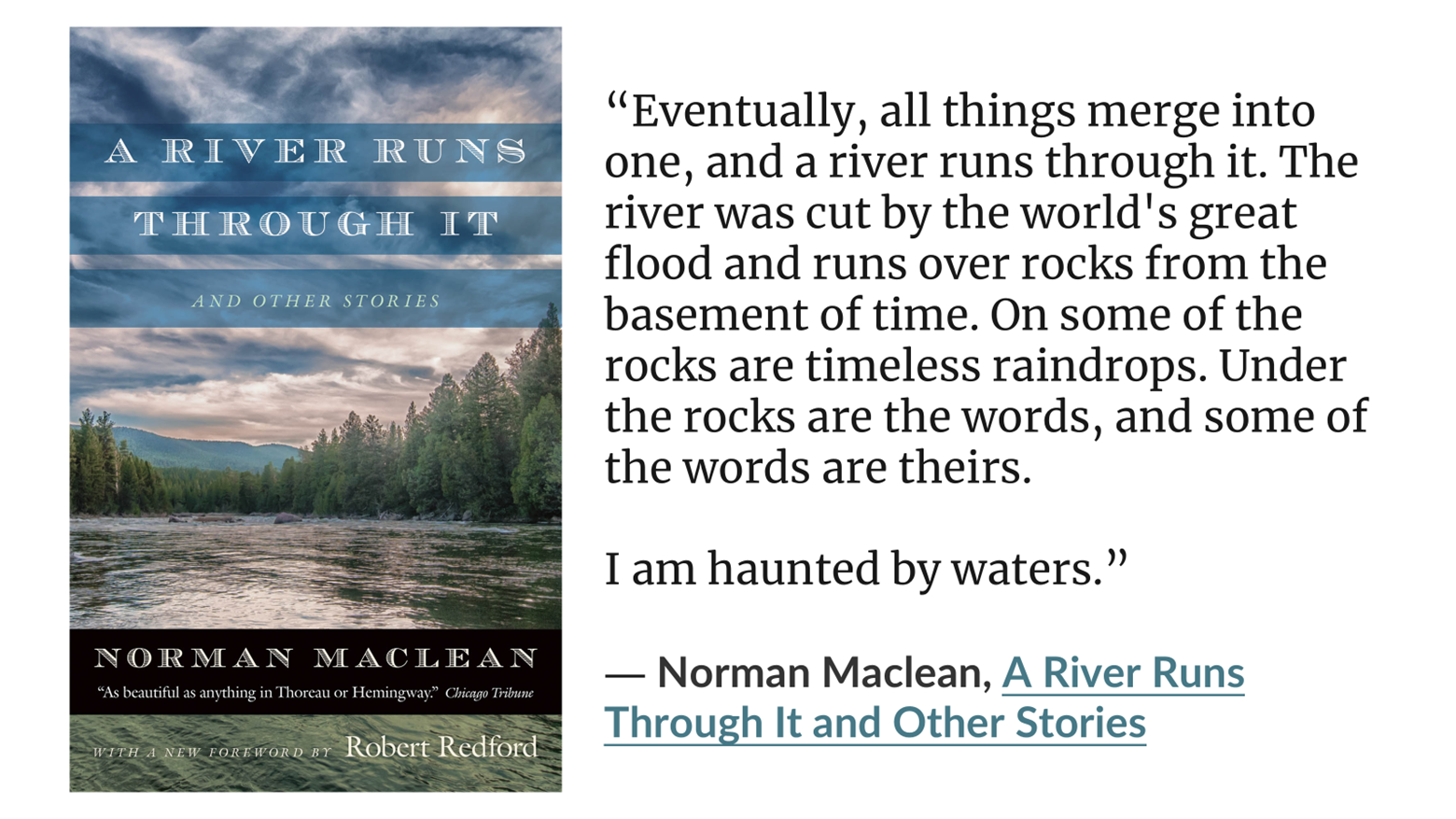
For Maclean and so many others, nature, the wilderness, is something we use, are in, and that transcends us. Maclean wrote about fishing, something one does in nature. But being on a river and landing a fly on the nose of a hungry trout, is only partially about the cast and the catch. It is also about timelessness, the eternity of the river itself. The river is something we are in, casting is something we do. In doing this we are also participating in something far greater than ourselves.
This is a photograph of a Montana landscape taken by a hiker.
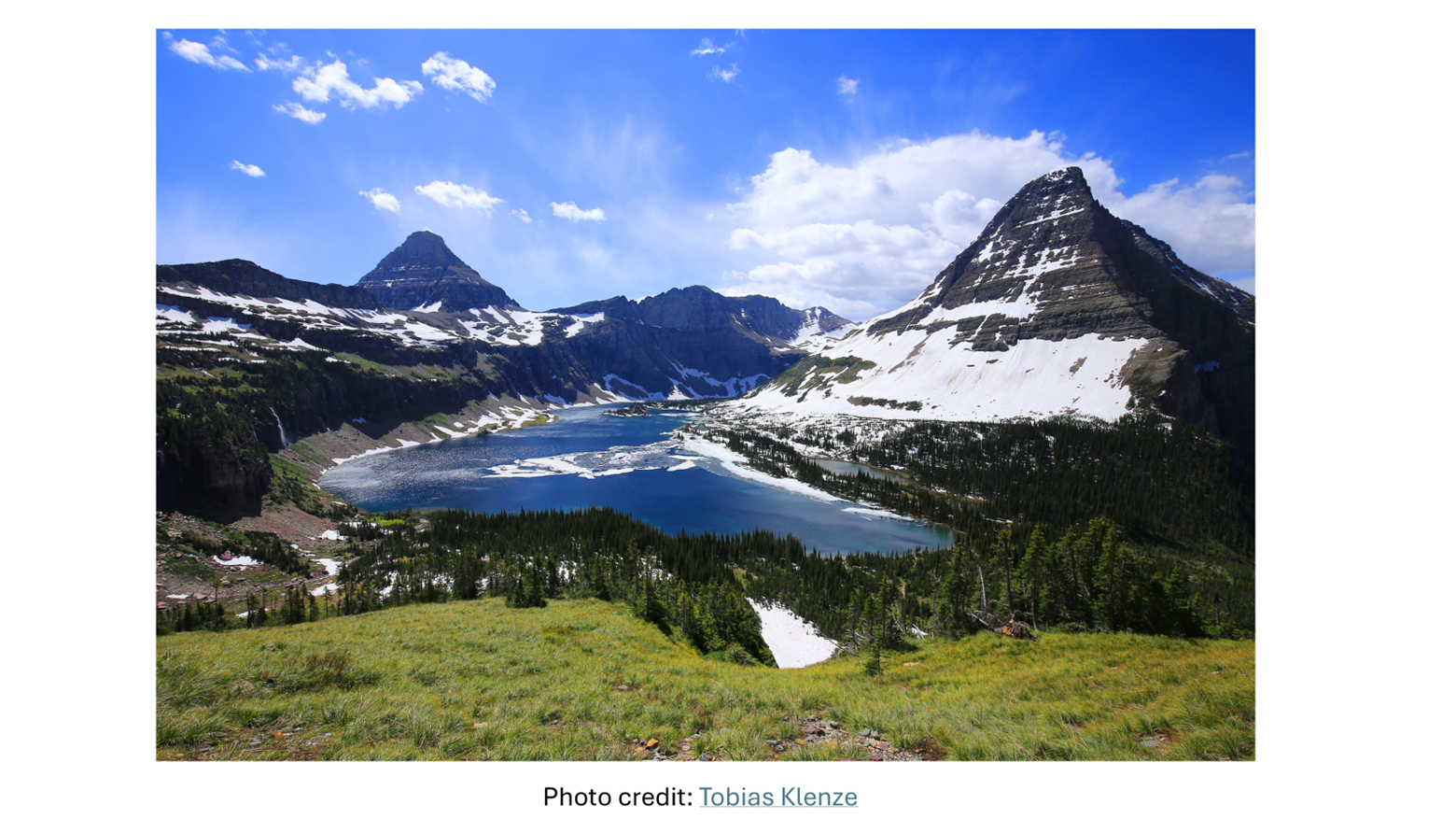
It’s a real place in which a real person was doing a real thing - hiking and taking pictures.
Similarly, this is a real place captured in a moment in time by a photographer. That view, on that day, looked like this.
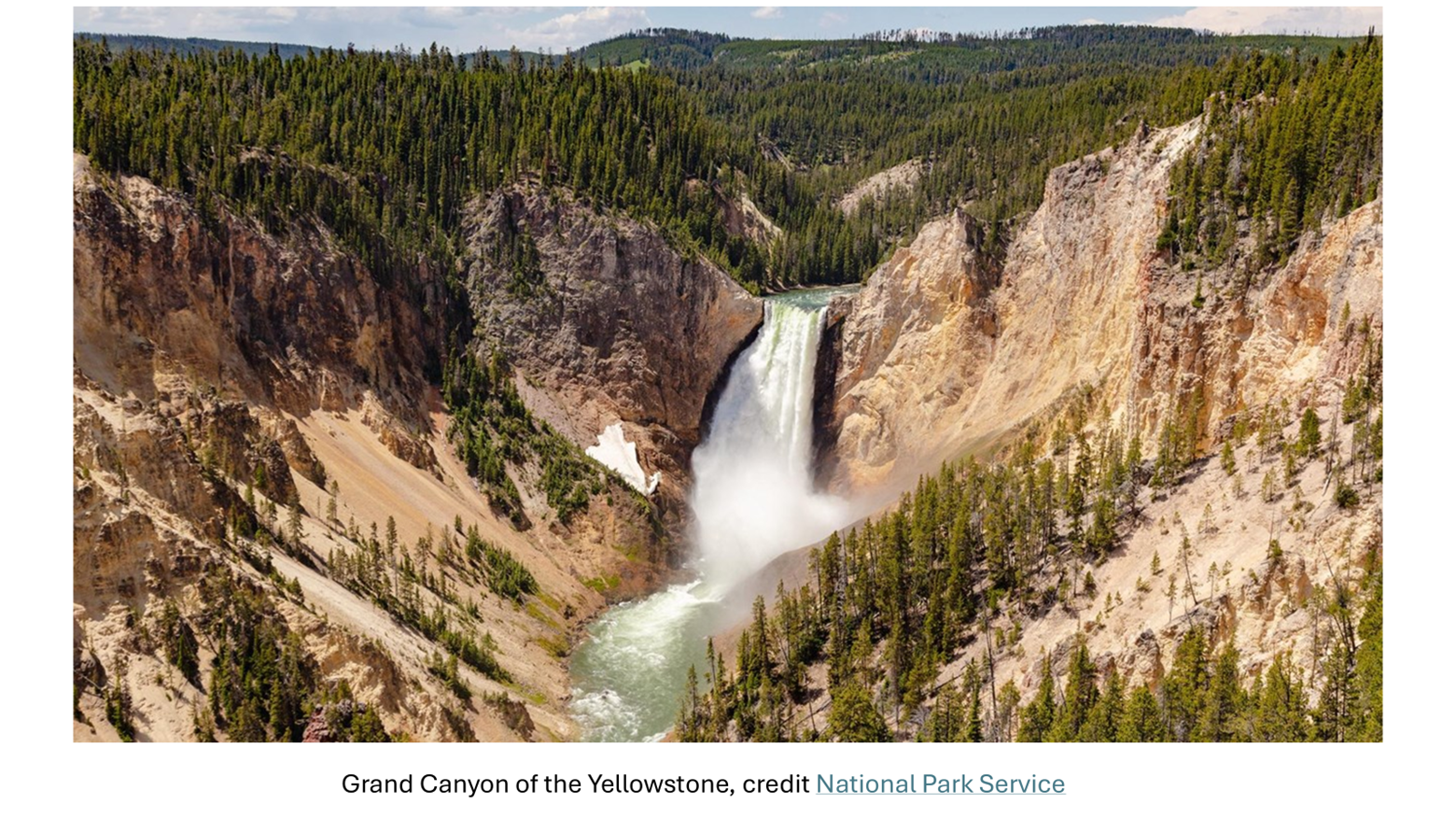
I know this isn’t in Montana. I know that most of Yellowstone is in a neighboring state, but stay with me for the moment.
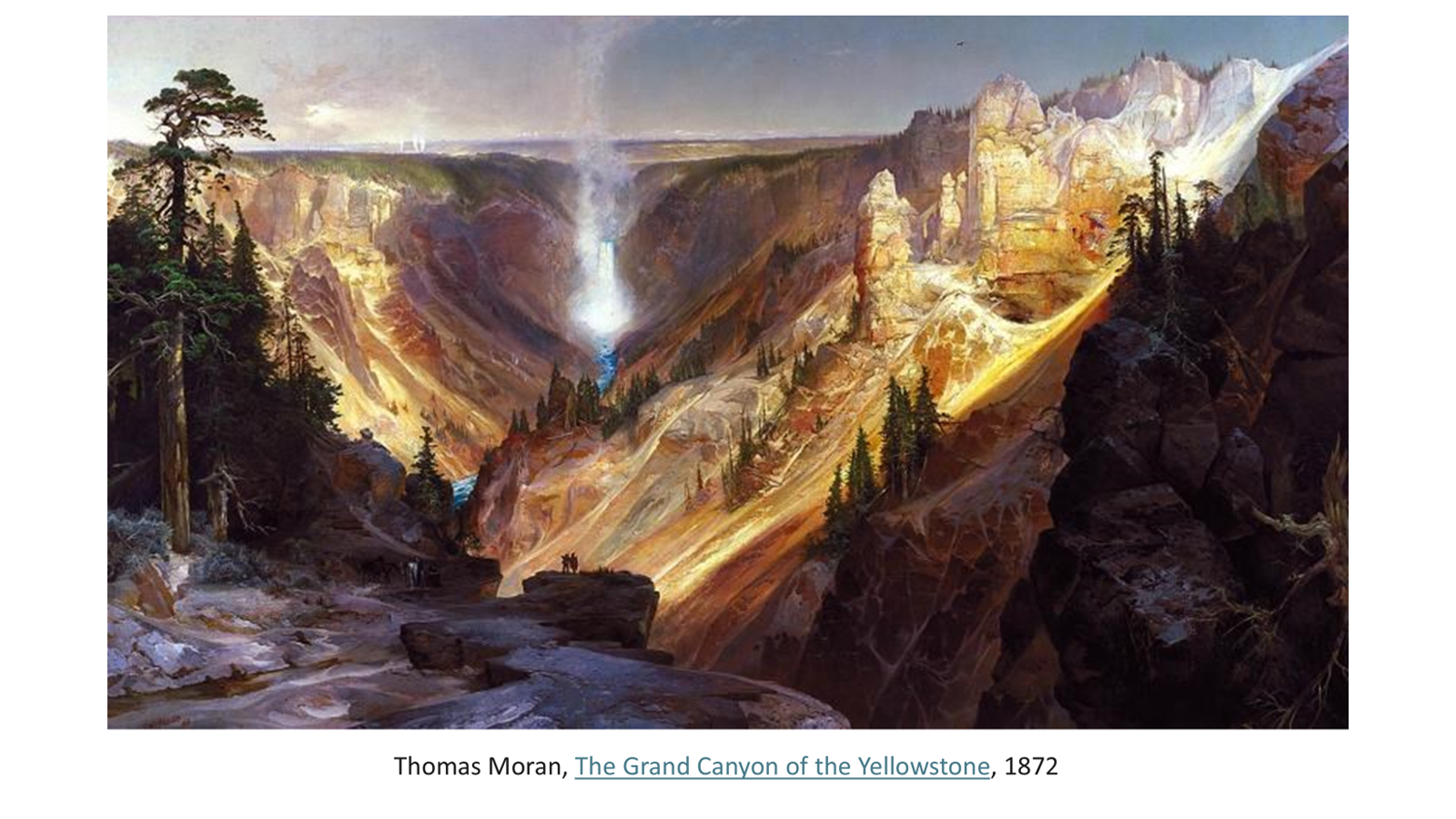
This is the same place, Grand Canyon of the Yellowstone, but rather than a photograph it is a painting by Thomas Moran. Moran was born in England, raised in the US, and became among the Hudson River School of painters most celebrated artists of the American West.
Moran’s Grand Canyon of the Yellowstone is both of a place and time, and also of a mythical place out of time. Look at the differences in light, where the water is falling, and the people on the bluff. Like the hiker and the Park Service photographer, Moran stood and saw something. He then painted something else, or at least not entirely the same, it is like the photograph only moreso. He painted what amounts to a chapel.
As the National Park Service put it, Moran’s paintings “captured the national imagination…” and helped inspire the preservation movements from which we benefit today.
Among the most celebrated of the Hudson River School painters who defined the American West was the German born Albert Bierstadt.
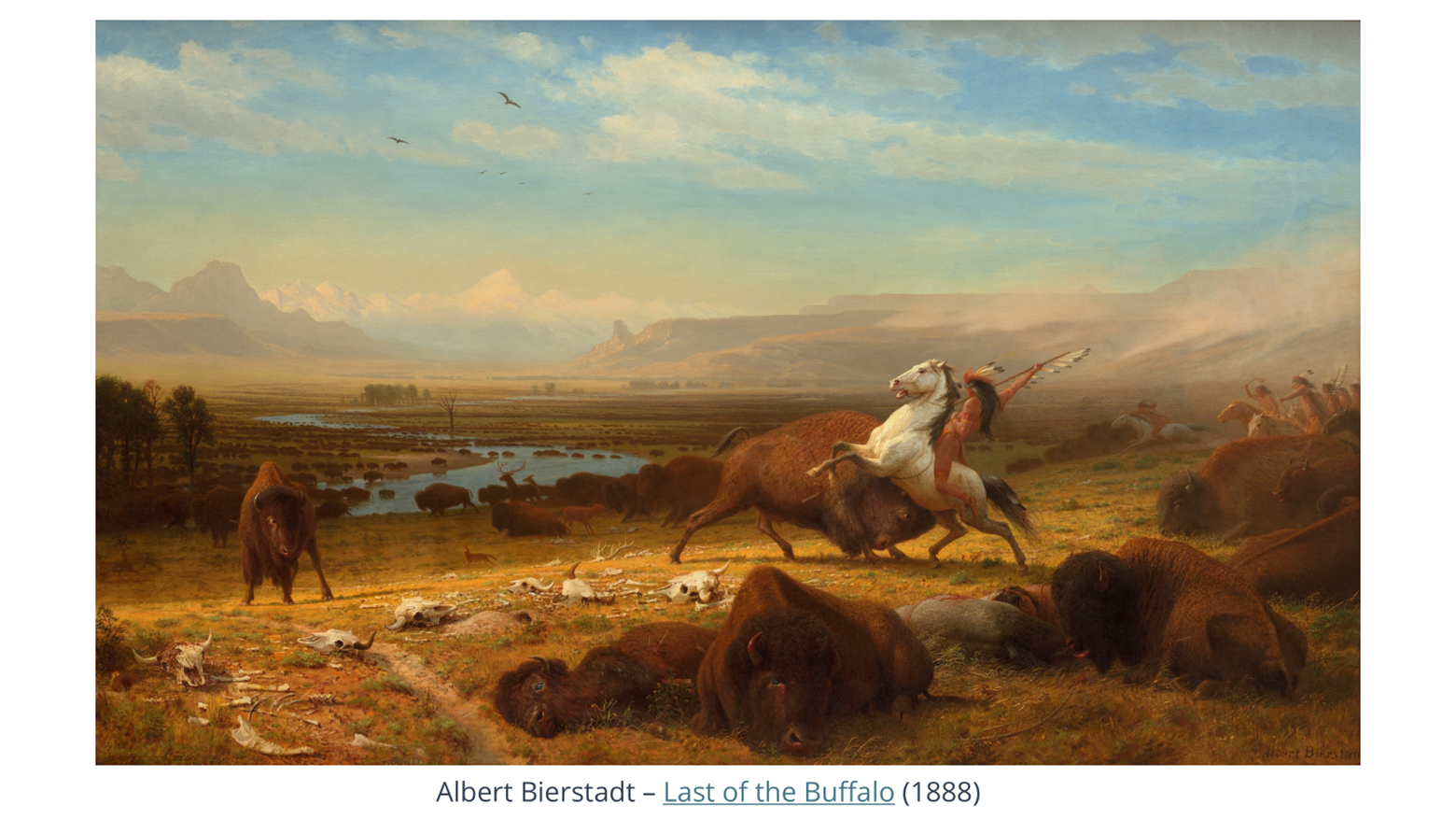
These paintings were massive, Last of the Buffalo is something like seven feet by 10 feet. They were shown theater-style, with audiences in red-velvet seats waiting for the curtain to be pulled aside to reveal the grandeur. They were shown in Congress and to policy makers to help them see what we now call Montana, Wyoming, Colorado and the rest of the American West.
They were also not entirely accurate.
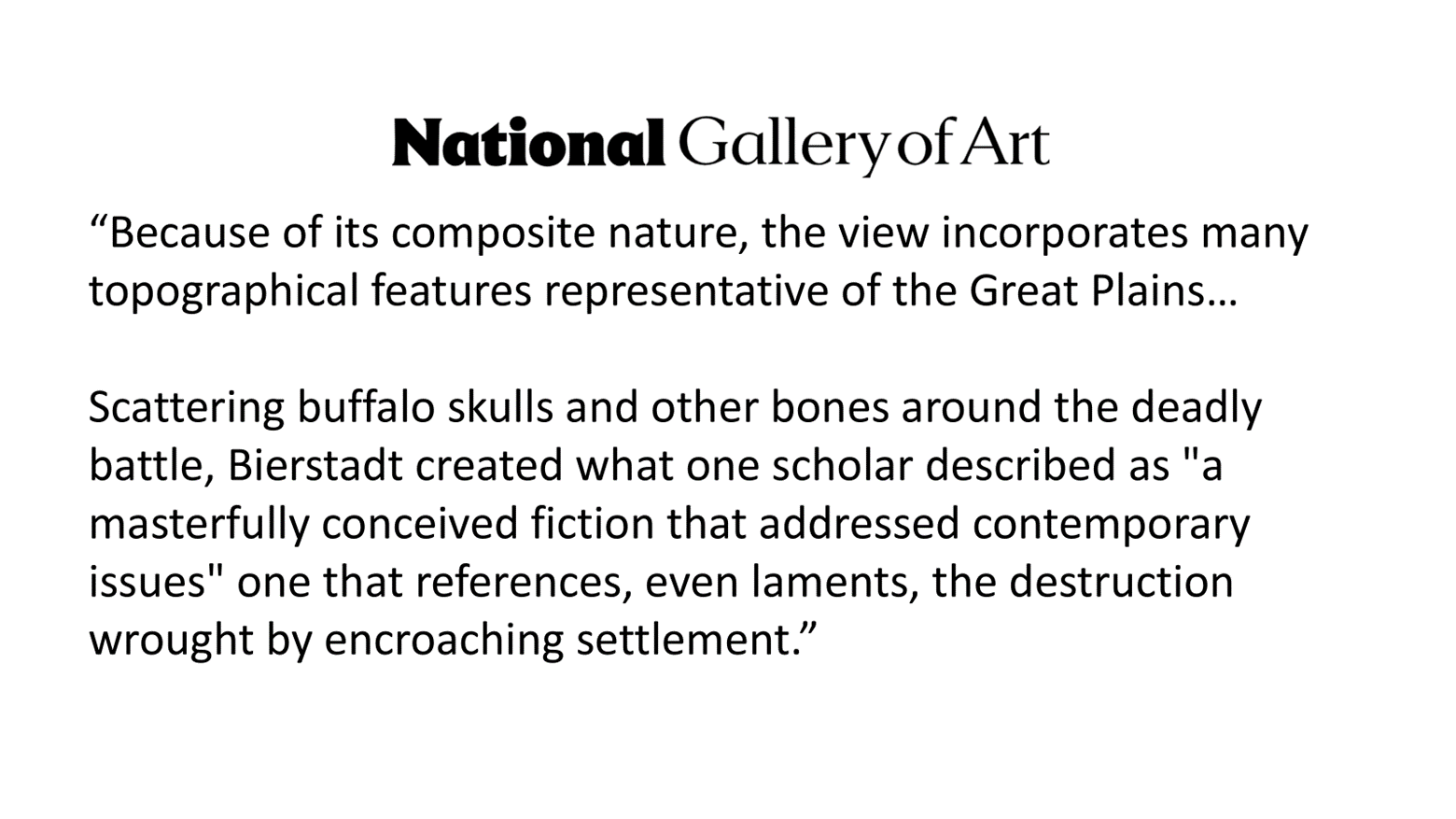
As the National Gallery of Art points out, this painting was a “composite” and “representative.” It was a deepfake in oil. It also lamented “the destruction wrought by encroaching settlement,” something that may hit home for many of you.
One of Beirstadt’s most famous paintings is Rocky Mountains, Lander’s Peak.
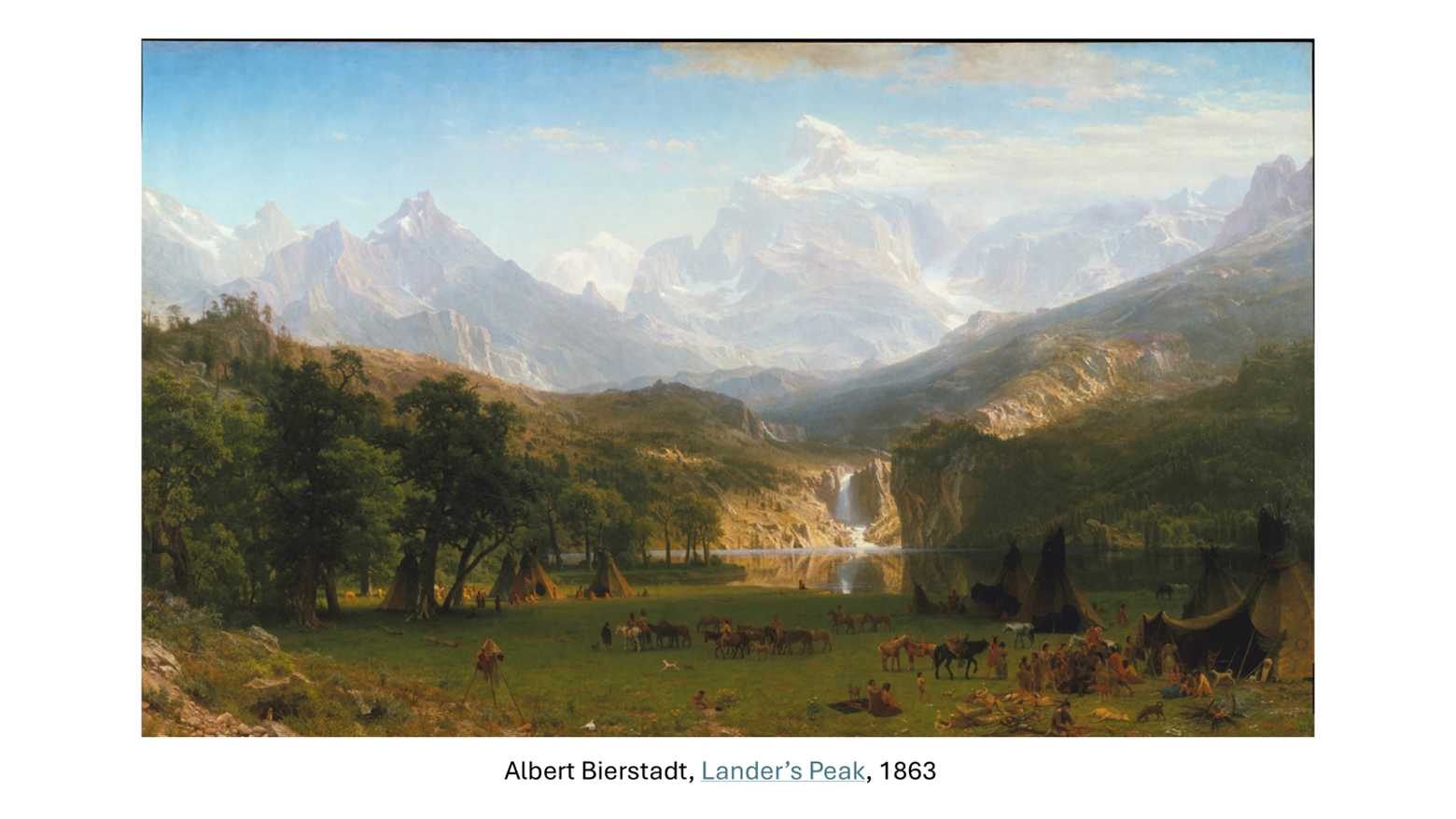
Like the Last of the Buffalo and Moran’s painting, it is true but not entirely accurate. As the Metropolitan Museum of Art put it,
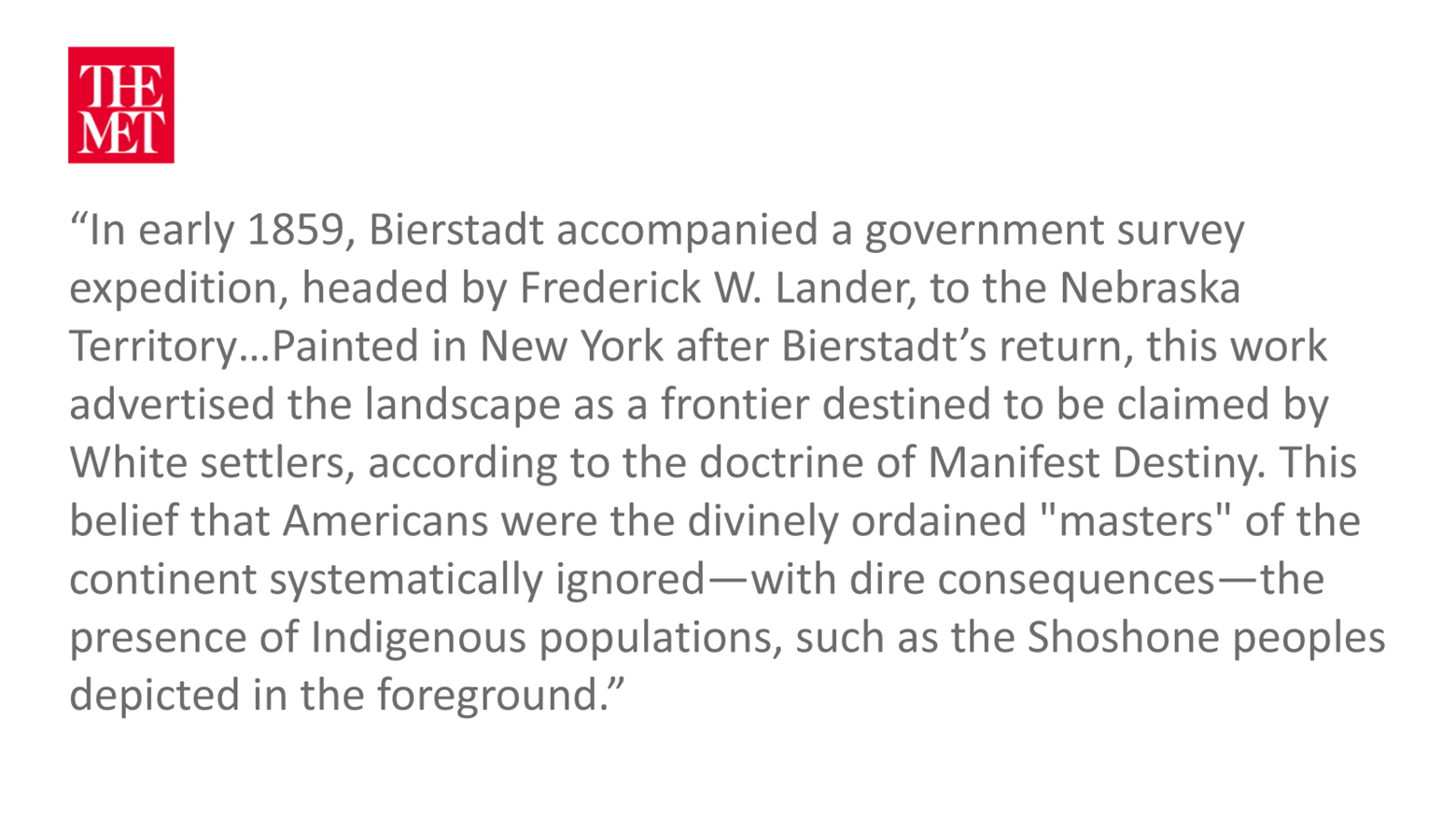
The meaning of course is given by a white European who fell in love with lands that had been occupied by native people for centuries, and that was soon to be conquered by other white Europeans and their descendants. The Met offers Native American versions of descriptions of some of the art whites made about them. Of Lander’s Peak, Kay Walkingstick of the Cherokee Nation wrote,
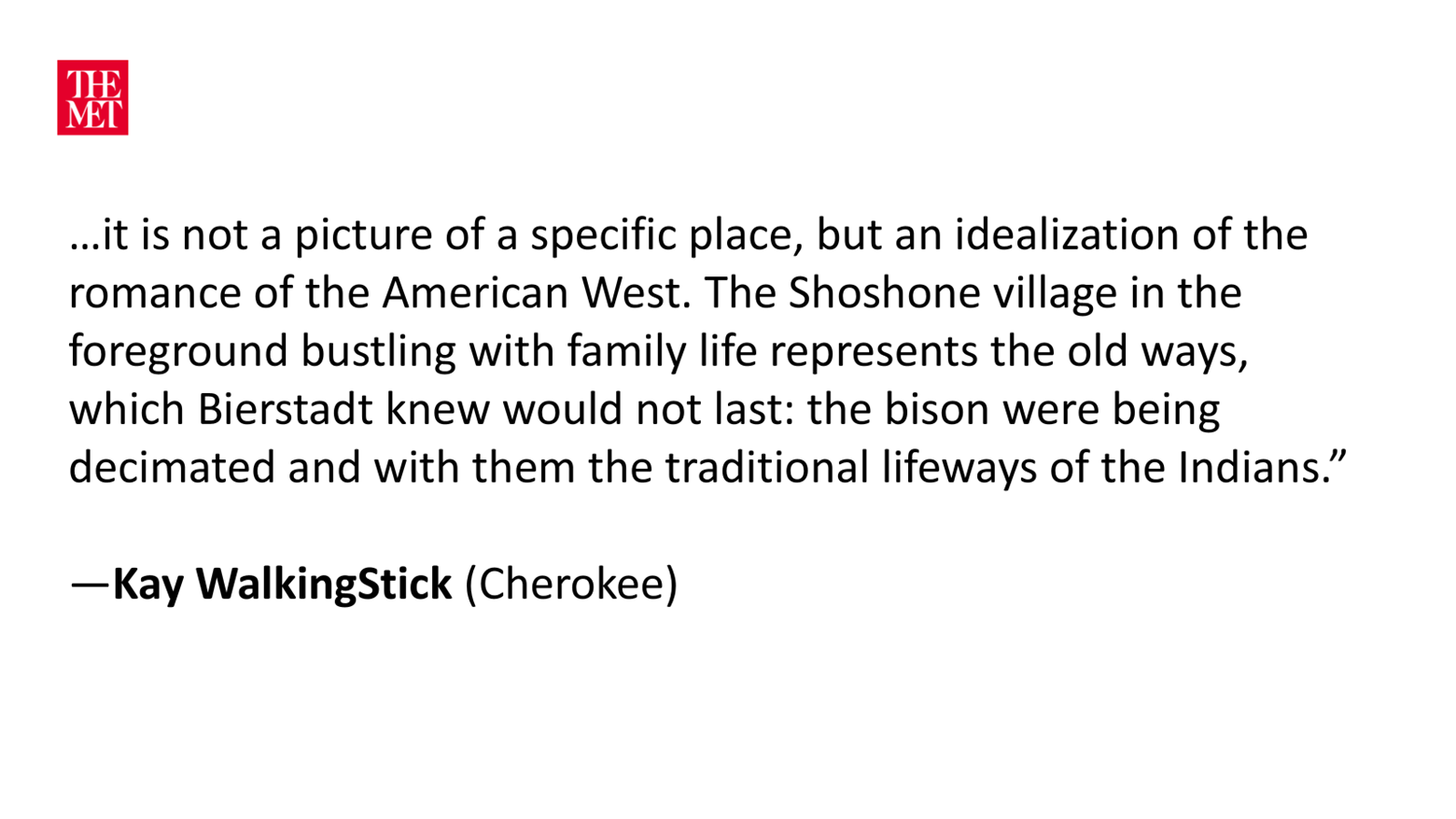
Bierstadt’s West was idealized, romanticized, and vanishing. This vanishing is better described as destruction inspired, in part, by painters like Moran and Bierstadt.
Since I am in Montana it is appropriate to include this painting by Maynard Dixon.
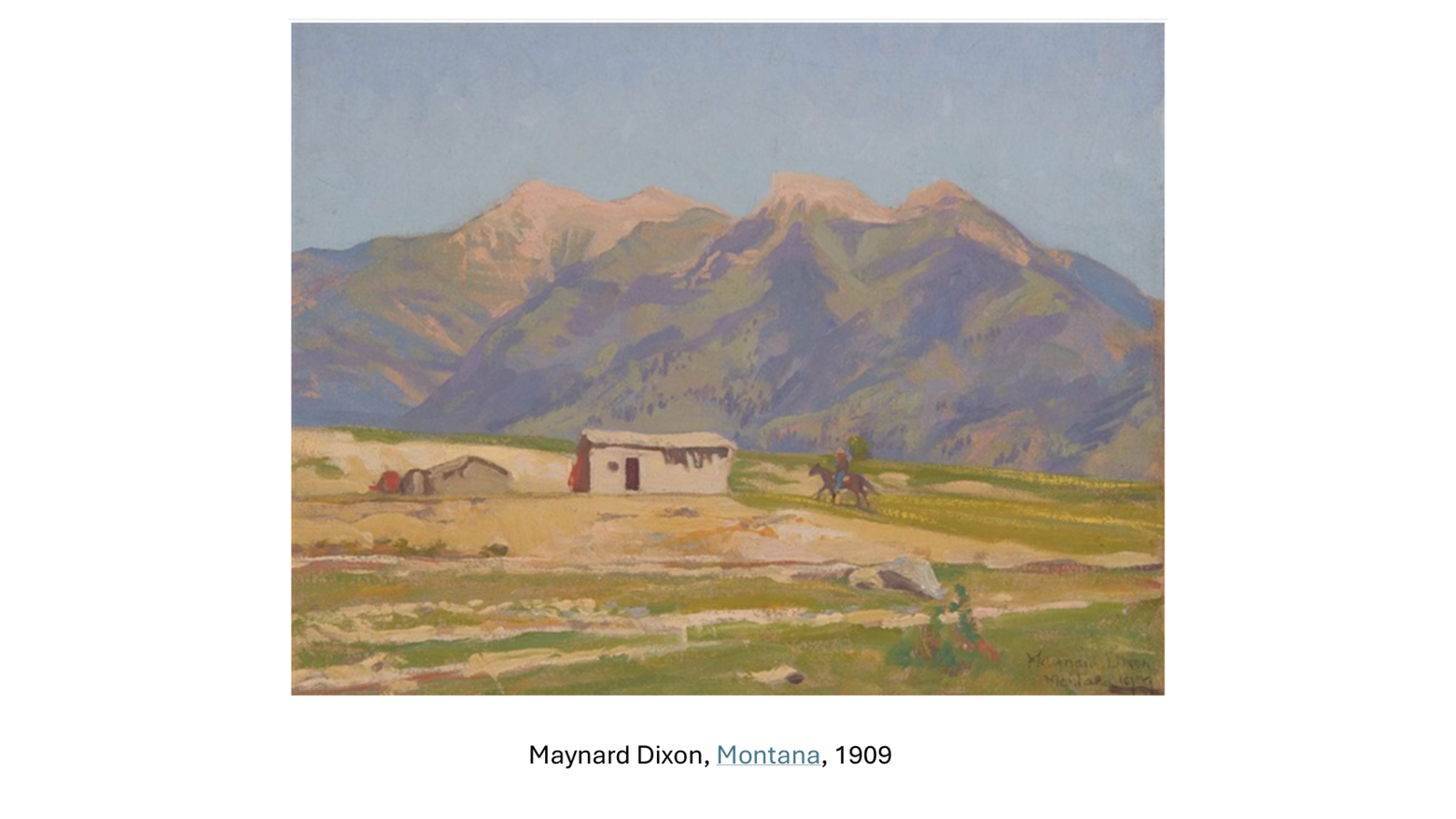
Like the Hudson River School painters, Dixon painted a place, but the point wasn’t the specifics of the landscape. No one is going to squint to see the quality of the construction of the house. That’s not the point. The point is the feeling of the place.
Thomas McGuane, noted angler with a writing habit who has called Montana home for a while says,
Dixon captures the “aboriginal ghostliness” of the American West and offers a “spiritual view…indispensible to anyone who would understand it.” McGuane also said that Bozeman is a place where soccer-moms give people the finger, which has nothing to do with anything I’m talking about, just thought it was worth noting.
All of these paintings are both of places, and about places. They show what the place represents, which includes the place itself, but the geography is less the point than the idea that the painters hope to capture or convey.
These depictions of the American West are part of what the National Park Service - which exists in part as a result of painters like Moran and Bierstadt - calls Wilderness Character.
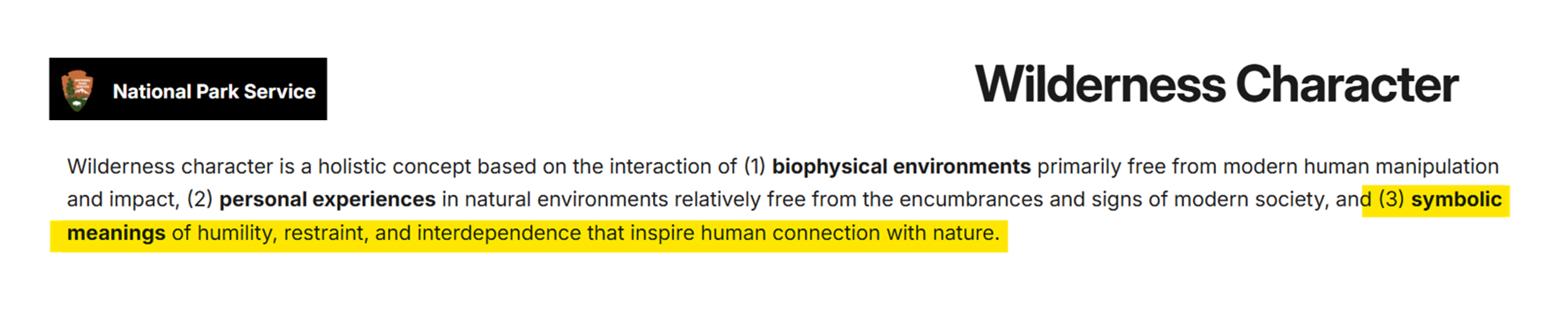
An element of this character to which I want to return later is the “symbolic meanings of humility, restraint, and interdependence that inspire human connection to nature.”
For all of the romanticization of the American West, the vision of a divinely ordained American Eden, for all the ghostliness and spirituality and waters that haunt, nature is also something in which we live. We hike, fish, hunt, mine, log, and build in nature. Here in Bozeman you walk your dogs on Pete's Hill, the mountains surround you. The wilderness exists in our imagination and we draw meaning from it. It also exists in real life. The best way to balance the competing priorities of everyone who uses the land today, who wants to preserve it for future generations, and who want it left as a place in which people find spiritual comfort as one does in a house of worship, is hotly debated.
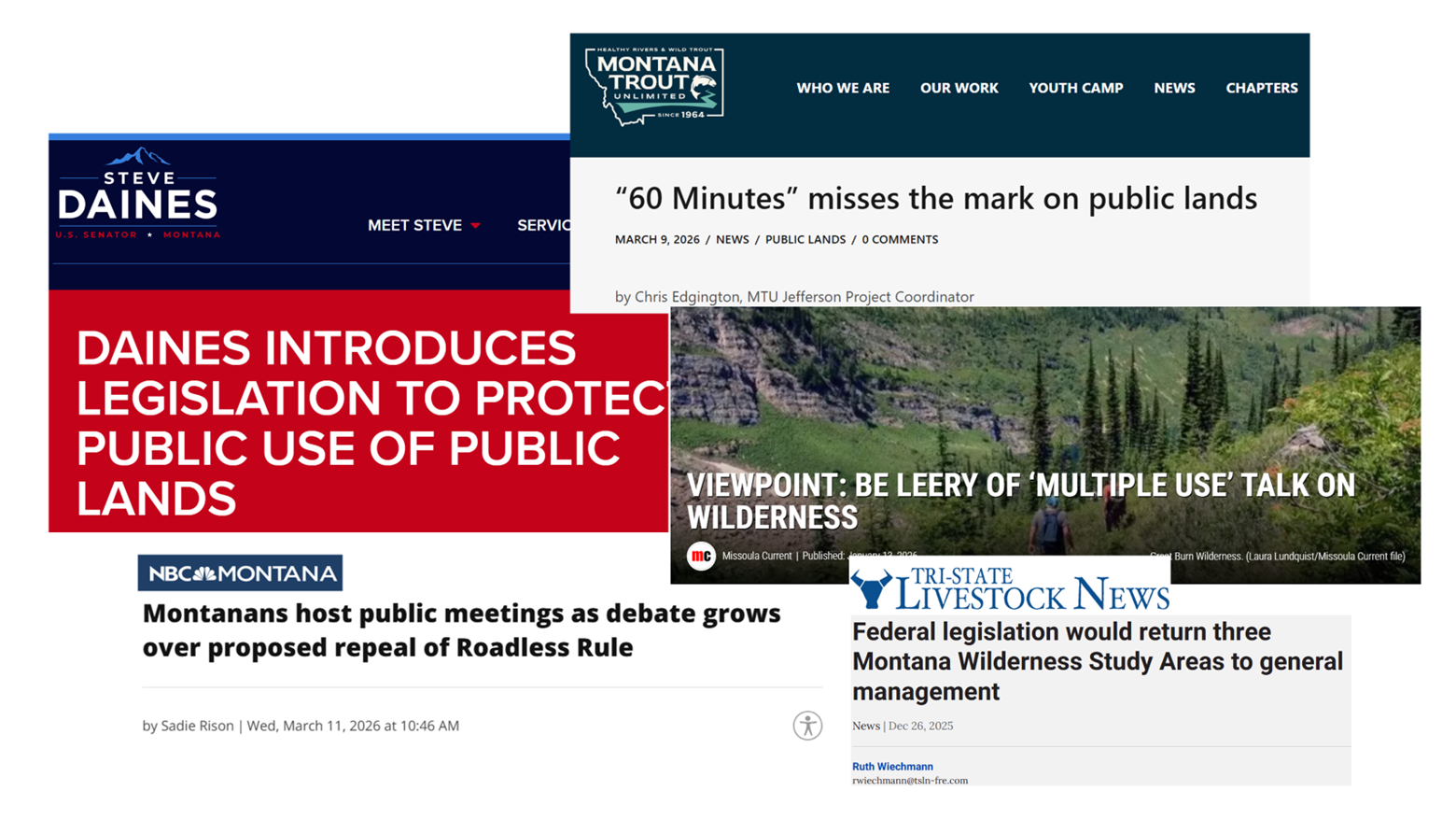
Those of you here in Bozeman, which is defined as not-nature because John Bozeman built a trail and trading route that coincided with the gold rush and the railroad, are debating about what others should do with the space outside of Bozeman. Nature, the wilderness, public space, are something of us and apart from us. We use and live in it, and it exists in spite of us. Maclean’s rocks and water were there before him and will be there long after we’re all gone.
The debates about the Roadless Rule, zoning, state laws, and the rest include questions of whether or not those with more money can get more access through things like mining or timber rights or development. We talk about regulating the space and who those regulators should be. We talk about individual rights and desires and community needs and wants. We filter those debates through our identities as people who have called Montana home for a few years, decades, generations, millennia, or only a few months a year. We debate as liberals or conservatives, ranchers, hunters, hikers, or faith leaders, and usually a mix of several perspectives. We bring ourselves to our debates about our places and our places in turn help define who we are.
You know all of this. I have just spent 10 minutes repeating things that you live every day. That’s the easy part of my argument. The tricky bit comes next.
I am going to make a parallel argument about politics. I know how absurd that may sound, but you’ve invested time in the set up, may as well stick around for the punchline.
Politics is both human and humanity
Aristotle famously argued that “Man is by nature a political animal.” For Aristotle, whose insights on rhetoric and politics still resonate, everything has a purpose and should strive for perfection in that purpose. A knife is meant for cutting, therefore a good knife should cut well. The purpose of people is achieving eudaimonia, which is often translated as “happiness” but is probably closer to "flourishing." Being fully human, achieving eudaimonia, requires being in community. As he said in the Politics,
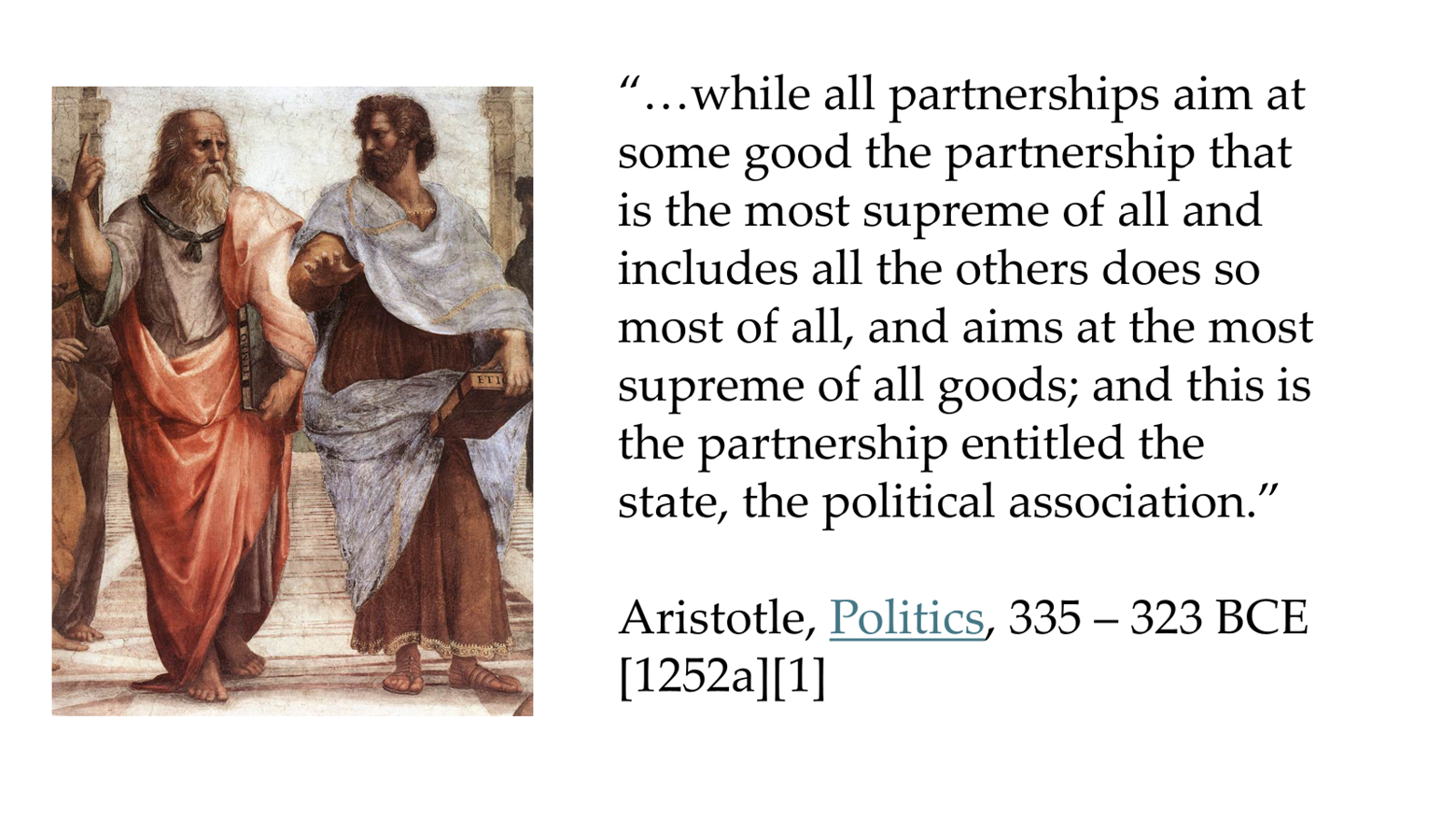
Political association is part of a “supreme good.” For Aristotle, only gods and lunatics live alone. The rest of us require other people to become fully human. When Aristotle said that man is a political animal, he didn’t mean yard signs and AI deepfakes of Taylor Swift, at least not so far as we know. He meant that people by nature should be with other people.
For many, to be in nature is to experience the divine. For Aristotle, to be in community is to be fully human.
Taken one step further, this means politics isn’t something done by other people somewhere else, it’s something we are right here. Part of the point of public lands is that they are used by the public. Sometimes that use is restricted, some places can be used in some ways and not others, but it’s there and we are all better when we are in it. That is as true of Glacier National Park out here as it is Rock Creek Park in Washington, DC. Neither are behind glass to be admired from afar. Similarly, part of the point of politics should be that the public participates in it. Unfortunately, our politics is increasingly a spectator sport in which partisans cheer for their teams or bet on the outcomes of elections. Other people vote, run for office, protest, go to meetings. Politics is for those with money, ideological fervor, and a lot of time on their hands. The rest of us put on our red shirt or our blue shirt and shout like crazy, or increasingly scroll past politics and look for cat videos or other more interesting sports. We’re fans in the stands, buying the merch and shouting at other people to do something. Politics is reduced to a hotdog eating contest.
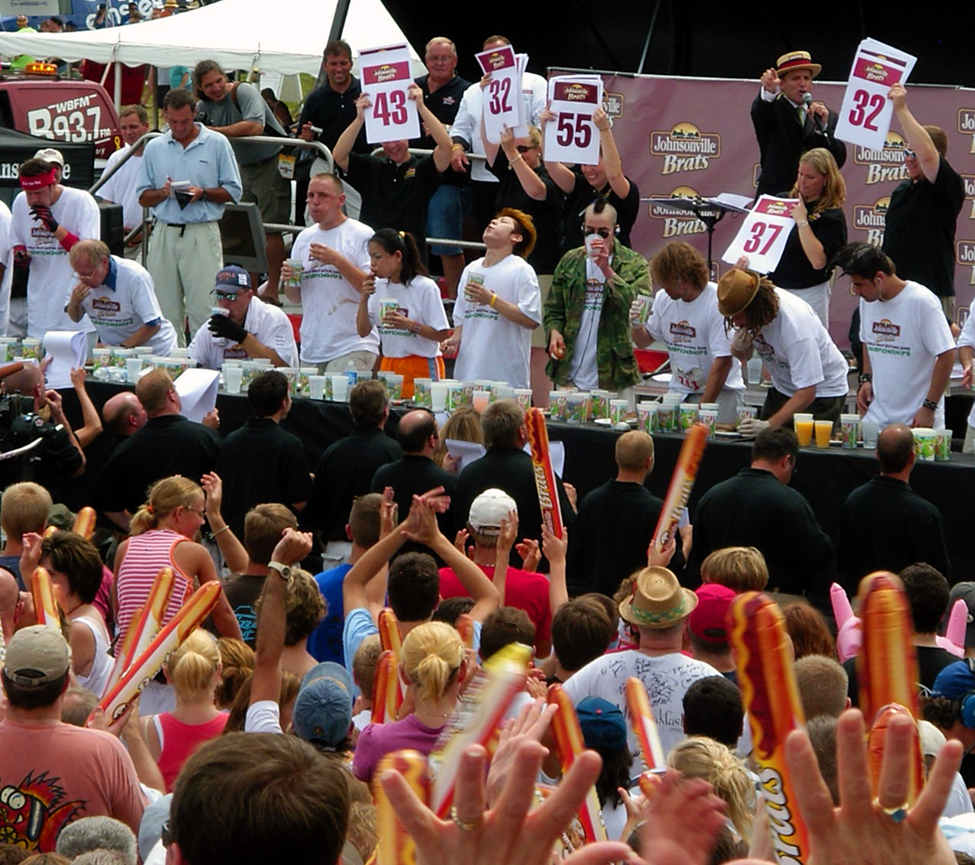
Nathan’s Hot Dog Eating Contest – Photo credit djOser
Such an approach makes for terrible politics because it encourages constant division. Part of the point of being a Red Sox fan is hating the Yankees. Part of the point of being a Republican is hating Democrats.
Politics as sports in which others participate is also fundamentally dehumanizing because we take the most human thing we do, coming together for the shared interest of our community to fully flourish, and turn it into spectacle . Sports are about contained conflict in which there is a victor and a vanquished, usually with ads and beer. Politics on the other hand should be about managing disagreement and fostering community. Baseball games, like State of the Union addresses, eventually end. But if we do politics right, it keeps going indefinitely.
If this is right, and I’m building the rest of my argument on this premise so I have a lot riding on its plausibility, then we should pay as much attention to how we are together in communities as we pay to how we are alone in the wilderness. Politics isn’t just something over there that other people do, just as nature isn’t just something over there that people point at. Politics is something we are, just as nature is something we are a part of.
Every nation is a story, and our story is unfinished.
Lander’s Peak, Yellowstone, Glacier National Park, Pete's Hill, and the rest were here before people named and renamed them. They will be here when all those who run around naming and renaming places are gone. That’s not true of politics or communities. Nature exists without us, politics is us.
Politics, nations, communities, the US, Bozeman, Europe, and the rest, only exist to the extent we agree they do. Where we’re gathered this evening was here before John Bozeman showed up. For millennia Native Americans called this land home. Over time, where we are this evening went from a trail, to a depot, to a town, to a city. People talked and built it into being. There’s nothing inherently “Bozeman” about where we are, any more than there’s anything inherently Washington, DC about where I live. A bunch of people showed up, said “let’s do a thing and name it after John,” a bunch of other people agreed, and away we went.
Where a place starts and ends, includes and excludes, is entirely a function of what we say. The meaning of a place, the city or state or nation inside the lines on a map, comes from our descriptions of that place. A place takes its meaning from the story we tell about it. Therefore, the story we tell about a place matters.
In his 1975 article, In Search of the People: A rhetorical alternative rhetorical scholar Michael McGee argued, “One begins with the understanding that political myths are purely rhetorical phenomena, ontological appeals constructed from artistic proofs and intended to redefine an uncomfortable and oppressive reality. Such myths are endemic in the human condition. Though technically they represent nothing but a ‘false consciousness,’ they nonetheless function as a means of providing social unity and collective identity. Indeed, ‘the people’ are the social and political myths they accept.”
Jodi Wallwork and John Dixon echoed this in the British Journal of Social Psychology in 2004, writing that nations are “…imagined as entities possessing a geographic and historical ‘reality’ that somehow exceeds their human membership.” This reality is constructed through language. As rhetorical scholar M. Lane Bruner put it, “…national identity is incessantly produced through rhetoric.”
Such a view isn’t limited to scholars. President Obama speechwriter Ben Rhodes wrote, “Every nation is a story. It’s almost never a simple one, and the story’s meaning is usually contested. National identity itself depends upon how we tell the story—about our past, our present moment, and our future.”
Writing after the 2024 Democratic and Republican national conventions, the AP’s Ted Anthony wrote, “Americans live in one of the only societies that was built not upon hundreds of years of common culture but upon stories themselves… In some ways, the United States…willed itself into existence and significance by iterating and reiterating its story as it went.”
The Gallatin River and the Bridger Mountains don’t care what we call them. But if you walked into Billings or Helena and said “this is Bozeman” you might get some pushback. Some people refer to Bozeman as Boze-angeles to signify the place is changing, and not for the better. The snideness tells a story of a once-pristine place being ruined by outsiders, which may be a fair critique, but is also ironic given that Bozeman itself was once a pristine place with other people in it before John Bozeman showed up. The stories matter because they give meaning to the place. This is as true for Bozeman as it is for Montana and the United States. These are words we put on maps, and to which we assign meaning, and about which we tell stories. We create our political communities in which we become fully human.
Those stories, like our public lands, are contested. The boundaries and meanings change.
In 1976 Barbara Jordan was a member of the US House of Representatives from Houston, Texas and the first woman and the first African American to give the keynote address at a Democratic National Convention. She told the audience that Americans were, in her words, "a people in a quandary about the present. We are a people in search of our future. We are a people in search of a national community." Jordan went on to say that, "We are a people trying not only to solve the problems of the present ... but we are attempting on a larger scale to fulfill the promise of America."
Our promise is our community. It is simultaneously who we are, where we are, and what we do together.
The stories we tell about that community should be honest, but should also be ideal. Our wilderness is the photographs taken by tourists, the paintings by Moran, Bierstadt, and Dixon, the prose of Maclean and McGuane, mining and logging, hunting and fishing, all of it. The power of art, as with the power of stories, comes from what the thing is as well as what it could be. As the late 20th Century American philosopher Richard Rorty wrote in Achieving Our Country, “Stories about what a nation has been and should try to be are not attempts at accurate representation, but rather attempts to forge a moral identity.” As he put it, “You have to describe the country in terms of what you passionately hope it will become, as well as in terms of what you know it to be now. You have to be loyal to a dream country rather than to the one to which you wake up every morning.”
If this is right, and again I’m banking on it at least being plausible, then the question becomes about the story we tell. My suggested story, my preferred paintings of democracy, were written by Gorski, Carlson, and other advocates and analysts of a humble and prophetic civil religion.
The term civil religion was coined by Jean Jacques Rousseau in the Social Contract in 1762. The idea was updated and popularized by Robert Bellah in his 1967 essay, “Civil Religion in America.” Bellah opened his essay writing: “While some have argued that Christianity is the national faith, and others that church and synagogue celebrate only the generalized religion of "the American Way of Life," few have realized that there actually exists alongside of and rather clearly differentiated from the churches an elaborate and well-institutionalized civil religion in America.”
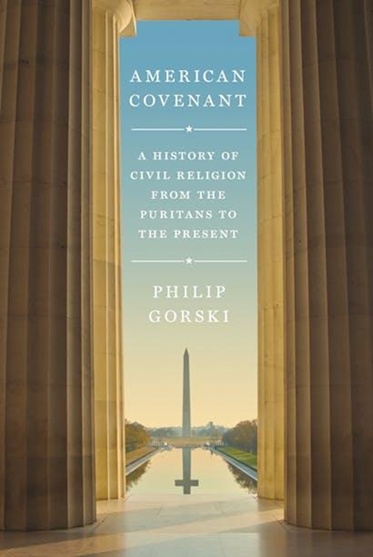
As Yale scholar Philip Gorski put it, Bellah’s civil religion “provides a conceptual framework for thinking about the American project…” Bellah wrote that, “What we have, then, from the earliest years of the republic is a collection of beliefs, symbols, and rituals with respect to sacred things and institutionalized in a collectivity.” Civil religion draws on Judeo-Christian traditions and something outside of or other than ourselves. It is not hostile to a person’s view of a creator, it exists alongside private faith, or lack of faith, in a god or gods.
John D. Carlson of Arizona State University explained that civil religion: “is the moral backbone of our body politic. It is the collective effort to understand the American experience of self-government in light of higher truths and through reference to a shared heritage of beliefs, stories, ideas, symbols, and events. For a country of immigrants and diverse peoples - where national identity is based not upon ethnic or tribal belonging or cultural homogeneity - civil religion provides a shared basis for citizenship.”
Like all faiths, our civil religion has an origin story. We have our sacred documents like the Declaration of Independence, and the Constitution. We have sacred places, including the United States Capitol, the Supreme Court, and the Lincoln Memorial. We have rituals and holidays, including Thanksgiving, the Fourth of July, Election, Day and Presidential inaugurations. And we have our saints and martyrs – Washington, Lincoln, Kennedy, and King among them.
These documents, places, and people are, like the Hudson River School paintings, idealized. But unlike those painters, the artists and poets of civil religion have to give physical representation to words.
My favorite view in Washington is of the Jefferson Memorial from the Truman Balcony at the White House.
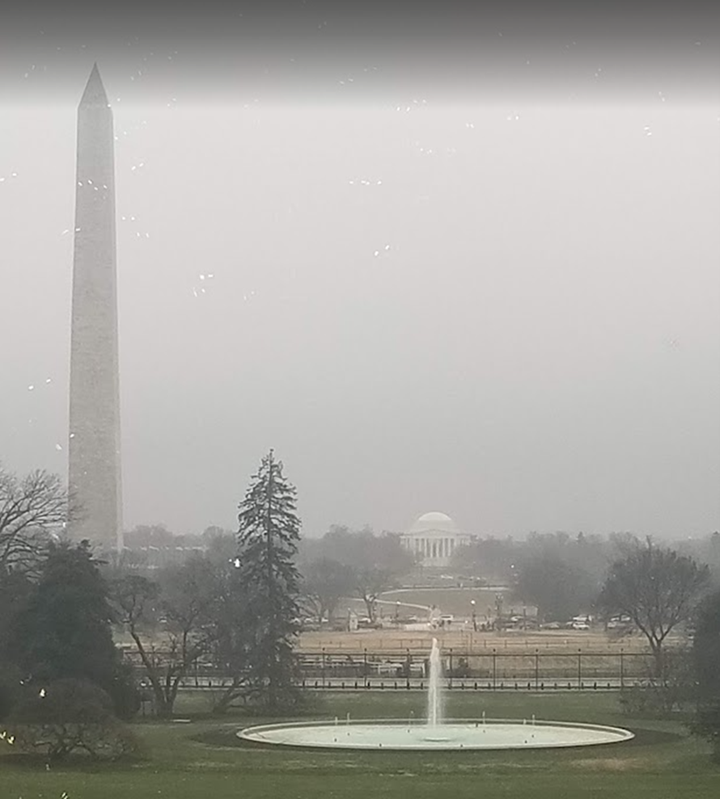
Every time I go to the White House, which isn’t that often, you heard my bio, I’m not on anyone's guest list these days, I try to spend time with this view. From one set of bay windows and one balcony off of a room in the White House, you can look across the National Mall, see the Washington Monument, and into the Jefferson Memorial. The statue of Jefferson is looking back at you. Trees are cut and bushes trimmed to ensure that Mr. Jefferson always has an eye on a democracy he helped found. A founder, a deeply flawed, complicated, author of some of our most important founding documents, is always keeping watch on the current occupant of the White House. Just as being in a place at Glacier you take a picture of can make you feel what Moran and Bierstadt felt, being in a place to snap this picture with my old phone makes me feel the weight, promise, and peril of national story. The photograph reminds me of a feeling of a place and the weight of an idea.
Maybe the most obvious physical representation of our American civil religion is the Apotheosis of Washington in the Rotunda of the US Capital.
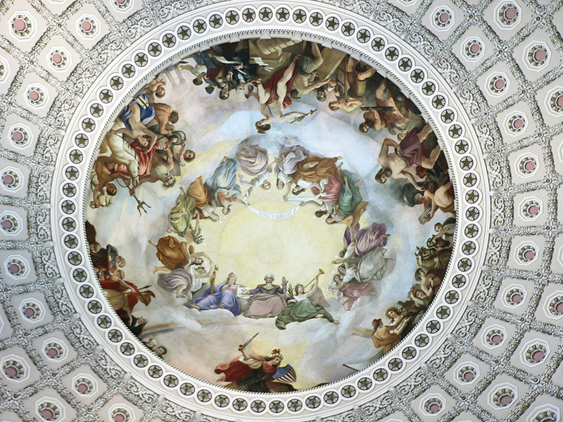
This painting on the underside of the rotunda in the US Capitol shows our first president ascending to the heavens. Subtle it is not. Every time I am in the rotunda I look up and catch my breath. After more than 30 years in Washington, including serving as a chief of staff in the House during President Clinton's impeachment, I should be cynical about it all. I have stood under this rotunda in the middle of a press scrum after a State of the Union address, an event as soul crushing as any in DC, and yet every time I look up and I catch my breath.
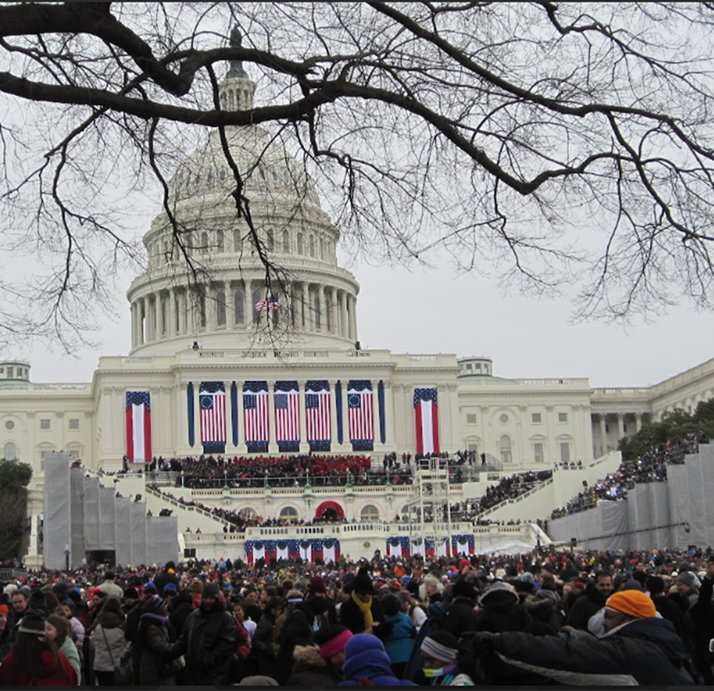
Every four years, hundreds of thousands of people gather on the National Mall in Washington, DC for the inauguration of the President of the United States. Spectators have no role in the event, the weather is often miserable and most people get a terrible view. It makes much more sense to watch the event from the sofa where it is warm and you can see and hear the speeches. But like countless others, I have stood in the rain and cold to watch the ritual, once flying cross-country to do so. I wanted to be at those events for the same reason I go to weddings: to bear witness to a sacred ritual recognizing a moment and honoring an ideal for which the ritual stands. I am there because that moment takes meaning from, and gives meaning to, the larger rhetorical construction of which it is a part.
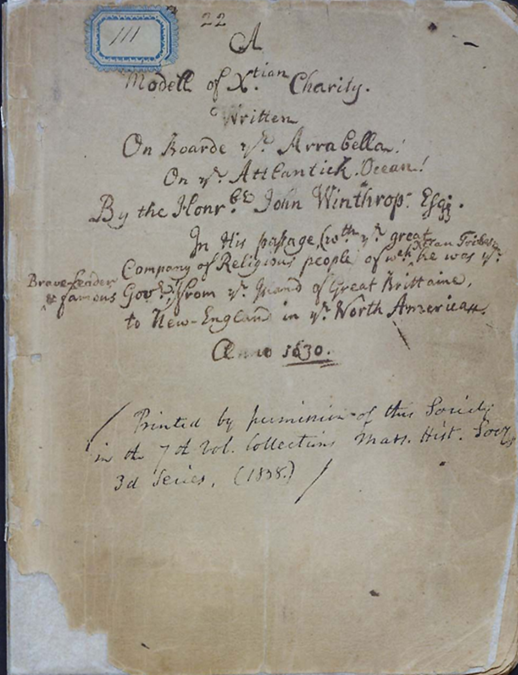
We were conceived as a “shining city upon a hill” by Reverend John Winthrop on the voyage to found the Massachusetts Bay Colony in 1630 before he even saw the continent. Fleeing religious persecution and general awfulness, the Pilgrims came to the New World to start afresh in a promised land.
America has faced hardship and “times of trial” and came out stronger. Early settlers faced unreasonable hardship, and through belief and hard work overcame all obstacles. The trials of Williamstown, stories of sacrifice, heroism, faith, and triumph, were the first stories of the founding of the republic. These are the stories of the American west in which brave settlers fought the elements in search of a place that only existed in stories and paintings. We had a civil war in the late 1800s and civil strife in the 1960s. Our national story is one of hope, loss, and redemption through humility, hard work, and a pursuit of a nation that lives up to the founding ideals that its founders themselves fell short of. Now in the first third of the 21st Century we are again facing challenges to our national faith. What happens next is up to us - or so goes the story.
Our civil religion is, of course, a myth. It is an explanation, not a box of facts. Like all explanations, it leaves in and leaves out. The explanation expresses a point of view. The “New World” was only new to the Europeans - to those living here it was already home and had been for a while. Some of the hardships colonists and settlers faced were from the native tribes who those invaders were trying to drive off their land. Religious freedom meant freedom for everyone who was more or less Protestant - Catholics, Quakers, and others were very much unwelcome in most early colonies. The faith of the Iroquois, Navajo, and others whose land the Europeans stole were not even worth considering by the early settlers, even though the founders incorporated Iroquois ideas into the new democracy. We chased Native Americans off their lands or we killed them. Women had no formal or institutional power. The man who wrote the phrase “all men are created equal” owned slaves. The list goes on. Like the paintings of Moran, Bierstadt, Dixon, and others it is an idealization, a capital T Truth to which to aspire rather than a factual representation in which we live. Our stories of a righteous people overcoming impossible odds to move closer to an ideal are more or less accurate, and they leave a lot out. Like the Hudson River School painters who told a visual story of an ideal, so do these stories that aim at a higher truth as well as the place and time in which they were written.
The facts matter. People were treated cruelly and murdered. Much of the awful origins of America continue to be felt today by our friends and neighbors. Some of you here have likely lived the effects of the facts that are sacrificed in the name of a good story. We experience the facts, but live the story, the facts take their meaning from the stories we tell about them. That's what people do. We tell stories to make sense of our world, to assign causes and predict consequences. Our stories create order in an otherwise chaotic reality. Our stories about our politics become our politics.
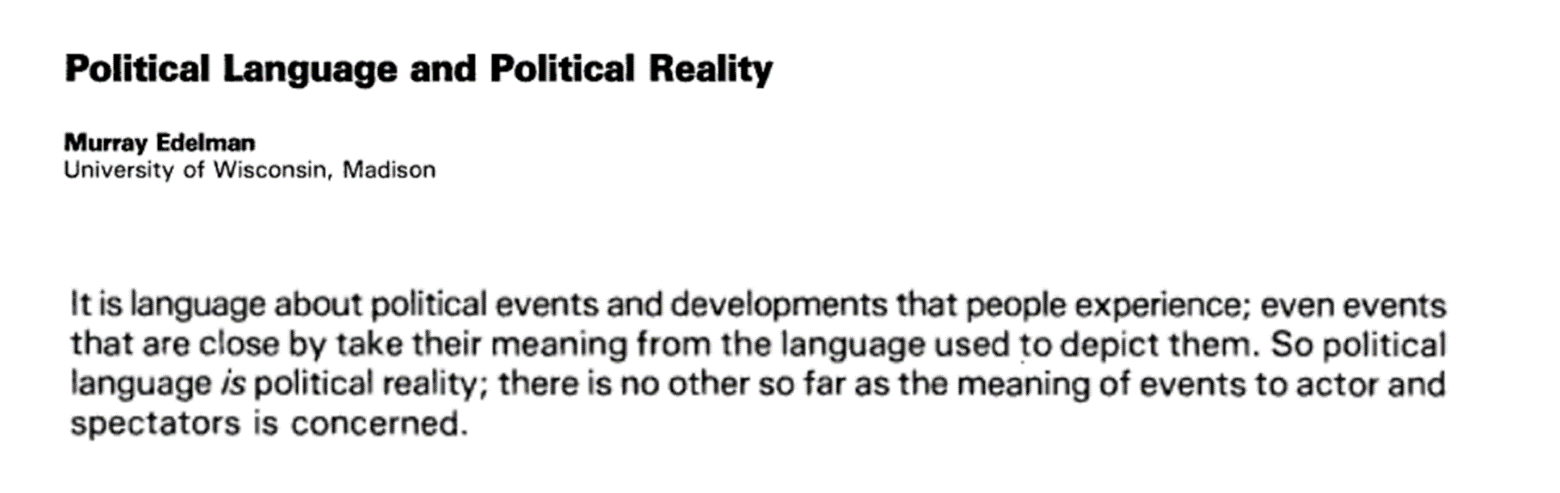
As political scientist Murray Edelman wrote, “political language is political reality; there is no other so far as the meaning of events to actor and spectators is concerned.”
In this light, being intentional about the story is important. The story is what tells us who we are and what we should do next in ways facts alone cannot; the facts need to be assembled into something coherent, and it is that coherence that matters. As Richard Rorty puts it, “We should face up to unpleasant truths about ourselves, but we should not take those truths to be the last word about our chances for happiness, or about our national character. Our national character is still in the making.”
The story of our politics, the language of our political space, that I suggest is one of a humble or prophetic civil religion.
Carlson explained that our civil religion “affords a model for forging consensus based upon founding principles that transcend differences in ethnicity, race, gender, religion, and political party. The promise of unity this vision holds out-based on convictions that we are created equal, endowed with certain inalienable rights, and share common dreams and pursuits—is greater than any individual.” This civil religion “gives voice to moral convictions and values beyond crude economic and political interests.”
Our story is imperfect and unfinished. Sexism remains real and a real problem. Racism is baked into every corner of our society. Stonewall was not that long ago, and members of the LGBTQ community still face legal discrimination and often violence. The list of things at which we need to do better goes on from there. But if we don’t keep reminding each other of the ideal we will fall exclusively for the real.
This view echoes Barbara Jordan's message to America in 1976, and Langston Hughes’ 1935 poem Let America Be America Again
O, let America be America again—
The land that never has been yet—
And yet must be—the land where every man is free…
and later,
O, yes,
I say it plain,
America never was America to me,
And yet I swear this oath—
America will be!
Out of the rack and ruin of our gangster death,
The rape and rot of graft, and stealth, and lies,
We, the people, must redeem
The land, the mines, the plants, the rivers.
The mountains and the endless plain—
All, all the stretch of these great green states—
And make America again!
Without Bierstadt’s “Lander’s Peak” there might not be any iPhone pictures of it. Without Washington, Lincoln, Hughes, and Jordan my argument might not make any sense at all.
There is danger in claiming such moral high ground. To borrow from Lincoln, it is easy to slip from being concerned about being on God’s side to assuming God is on ours. The former is humble and always working to improve, the latter assumes greatness has already been bestowed therefore anything the country does is great – the only sin is questioning, because questioning assumes that we may not be perfect, and since perfection is our nature, humility (which assumes one might be wrong) is wrong.
This strain of arrogant and unreflective civil religion may seem dominant at the moment, but it is not the only strain of the faith available. Carlson, Gorski and others argue for a prophetic version of civil religion. In this version, as Carlson put it, there is a “propensity to instill humility. Its prophetic strands presume a nation can be called to account for its wrongs—even punished, as Lincoln interpreted the woe of war inflicted on North and South alike for the offense of slavery.”
For Gorski, civil religion “is fed by biblical as well as philosophical sources, specifically prophetic religion and civic republicanism.” The prophetic piece of the faith draws on God’s demand for “individual righteousness and social justice.” Civic republicanism generally holds that “free institutions are inherently fragile and cannot survive very long without a virtuous citizenry to support them.” This stands in contrast to what he calls religious nationalism, which is rooted in blood sacrifice and is ultimately apocalyptic. For Gorski, this vision is a “red-hued canvas in heavy oils, filled with the blood and fire of war and Apocalypse, and replete with battle scenes in which the forces of good and evil square off on land, on sea, and in the air.” It is easy to see a parallel between this description of the United States and our visions of the American West.
Like the Hudson River School paintings, rhetorical visions of the United States run alongside the reality of politics. Our public debate rarely hits the high points imagined by the people I name-checked here. We have our moments - Lincoln at Gettysburg and his inaugural addresses, FDR’s “Four Freedoms” speech, Kennedy’s inaugural, Reagan commemorating the 40th anniversary of D-Day, Obama’s 2004 Democratic National Convention speech - but most of politics most of the time is stretches of boring separated by moments of pettiness and acrimony.
And, occasionally, assaults on our sacred spaces. One reason the January 6th insurrection was so brutal for so many is because it was an attack on a sacred democratic space. Timothy McVeigh’s bombing of the Alfred P. Murrah Federal Building in Oklahoma City on April 19, 1995 was the deadliest act of homegrown terrorism in US history. As terrible as it was, and it was terrible, I used to know someone whose daughter was killed in the attack and a close friend was evacuated from a neighboring building, it was a bombing of a building with people. Jan. 6 was an attack on a sacred space which symbolizes an ideal. If the Capitol is a sacred democratic space, then the assault was a sacrilegious act.
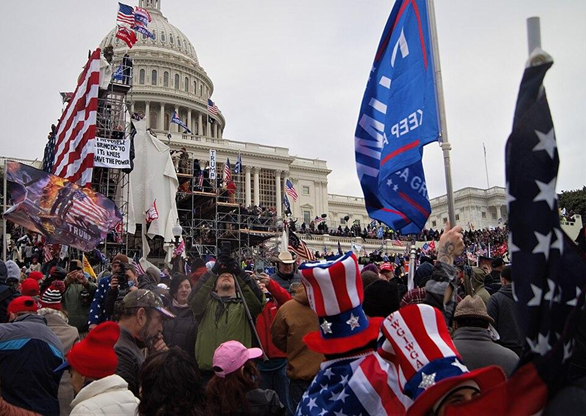
Storming the US Capitol on Jan 6, credit Tyler Merbler
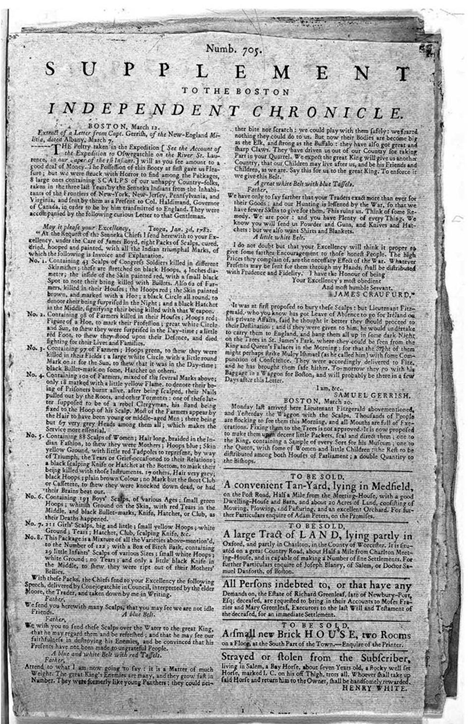
Noble isn’t a word most people would use to describe our current politics. And while our politics may be worse now than it has been in a long time, our politics have always been a mess. Ben Franklin wrote a real supplement to a real Boston newspaper and included an editorial that made stuff up about the British to persuade Europeans to side with the colonies. In the presidential campaign of 1800, supporters of John Adams said that if Thomas Jefferson were elected “our wives and daughters would be subjected to legal prostitution,” that “murder, robbery, rape, adultery and incest will openly be taught and practiced,” and that he fathered a child with one of his slaves. That last one is true of course, but not the others. A Jefferson supporter said Adams was a warmonger and “behaved neither like a man nor like a woman but instead possessed a hideous hermaphroditical character." Campaigns went downhill from there.
We live in the real world of our politics, a real world that can be, with apologies to Thomas Hobbes, brutish, nasty, and long. But we also have an idea of a noble politics to which we can strive. Our politics is equal parts West Wing, House of Cards, and Veep. It can also be teeth achingly dull. One of the most important lessons I learned interning for a political consultant in college is that most of politics is mostly boring most of the time.
That is as true of Washington as it is of Montana.
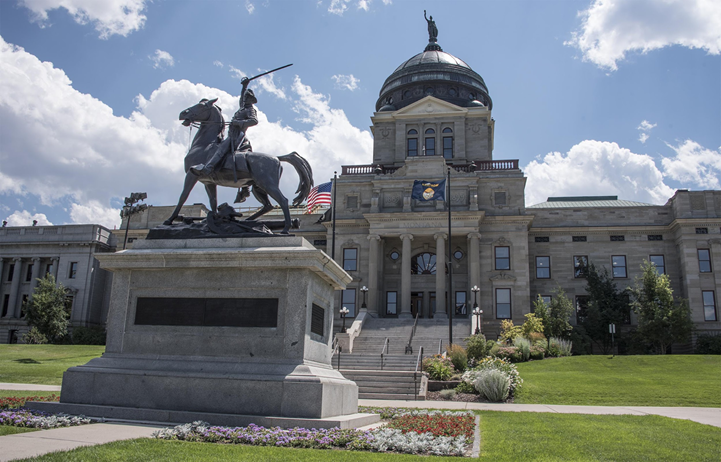
Montana State Capital, credit gillfoto
As with our National Parks and public space, how and who we are in our political space is contested.
In 2026, our political space isn’t just physical. We increasingly gather online to cajole, shout, bicker, and bait each other.
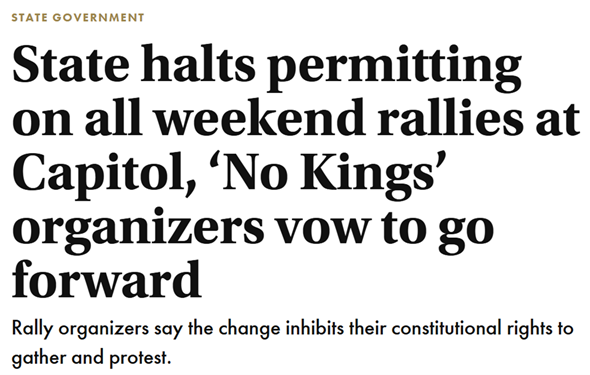
Our political space, not just the places in which we gather and debate, but the vision of that space, the story that is our political space, is contested. We argue about whose voices are legitimate or valid. We worry that those with money have more access and power than the rest of us, that the golden rule means that he who has the gold, rules. Who can do what, when, where, and to whom are questions Montanans are debating about the Roadless Rule and also about campaign financing. Just as many in Bozeman and around the state are debating about the best way to ensure that public lands remain accessible today and are preserved for future generations, people like Jeff Mangan are working on the Transparent Election Initiative to ensure that political space in Montana is accessible to everyone today and is here for everyone in the future.
Our political space is a complicated mess.
Nevertheless, our politics, like our public lands, can be seen as the real in pursuit of the ideal. Landers Peak is a painting by Bierstadt, a photograph by a tourist, a scientists, a hiker, and a tour operator. A debate about flags in Bozeman is about how Bozeman views itself. Statues of Jeanette Rankin, Nelson Story, and Jim Bridger tell a story about Bozeman’s past that informs its present and guides its future. Those not honored, Bozeman figures not cast in bronze, also tell a story. What we don’t highlight or talk about can be at least as important as that to which we draw attention and from which we draw inspiration. Bozeman is about Rankin and Story, and it is about the Roadless Rule, campaign finance, and what flags to fly. Bozeman is the story you tell to yourselves and others about Bozeman. You are the artists of your political space.
If this is all correct, or at least makes sense, then we should think of our politics as we do our public spaces. If our politics, like our public spaces can be divine and practical, awe-inspiring and frustrating, places to find our humanity, places sometimes full of garbage, and places that can be too full of too many people who think they’re entitled to something to because they’re rich or well connected, then we should treat our politics as we do our public places.
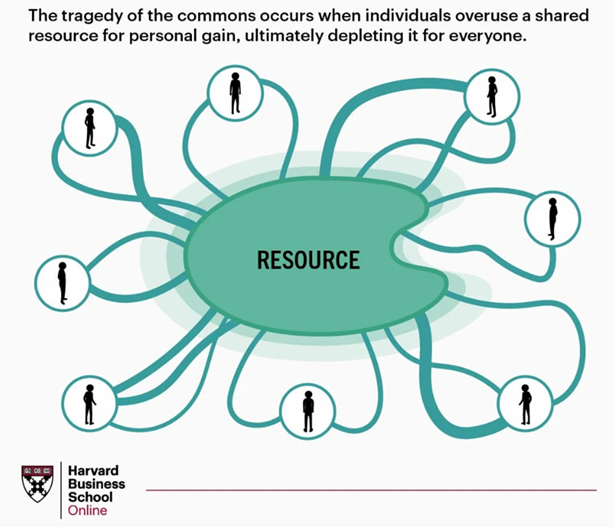
Our politics, like our public spaces, can be victims of the “tragedy of the commons,” the idea that a few selfish people will use common resources for their own private gain and leave nothing for others or for the future. You live with the complexities of grazing rules, which is a way to manage the threat of the tragedy. Our politics has similar complexities that extend beyond the land. In a political tragedy of the commons, politicians and private interests can get what they want from our politics, get richer and more powerful, and leave little or nothing for everyone else or for the future.
More than 30 years ago I worked in the Arizona office of Congressman. I wrote something for him that had some standard line like “those people in Washington…” or some other generic swipe at Congress. My boss crossed it out and said “you can’t burn down a house and expect to live in it.” He would criticize policy, but never attack the institution. We need to stop burning down our political house. We need to stop attacking the land that sustains us and grounds us, and we need to stop attacking politics through which we achieve our full flourishing as people.
If you’re still with me, and I recognize that might be a big if, where does that leave us? Back where we started, thinking about how to be in and preserve our public places.
A lot of people, including me, spend a lot of time talking about civil discourse, structural changes to our politics that would give people incentives to be less awful, and the need to stop making every disagreement apocalyptic and every opponent evil incarnate. Those are all good things. You can’t govern in ALL CAPS. Please be more civil and less shouty, among other things that makes it more effective when you do have to raise your voice. Dr. King's Letter from a Birmingham Jail is powerful in part because he expresses reluctance at having to resort to civil disobedience.
In the spirit of this series and this talk, I want to suggest some approaches to political space drawn from how we often view our obligations to public space.
You live, work, and play in a beautiful place. You have your rules for treating space with respect. So I am going to end as I began, telling you what you already know, but in a new context.
First, be in political space as you are in parks and wilderness. Hike, fish, go to a town hall meeting, talk to your neighbors. You don’t have to move off the grid or run for office, but you probably spend time in your state and national parks, and shouldn’t just sit on your sofa watching UFC or your favorite partisan pundit.
Here are a few suggestions from a company called Park Tables, which as far as I can tell sells tables for parks, which would make sense. The parallels aren't perfect, but hopefully help answer the question of how to think about politics the way we think about our public spaces.
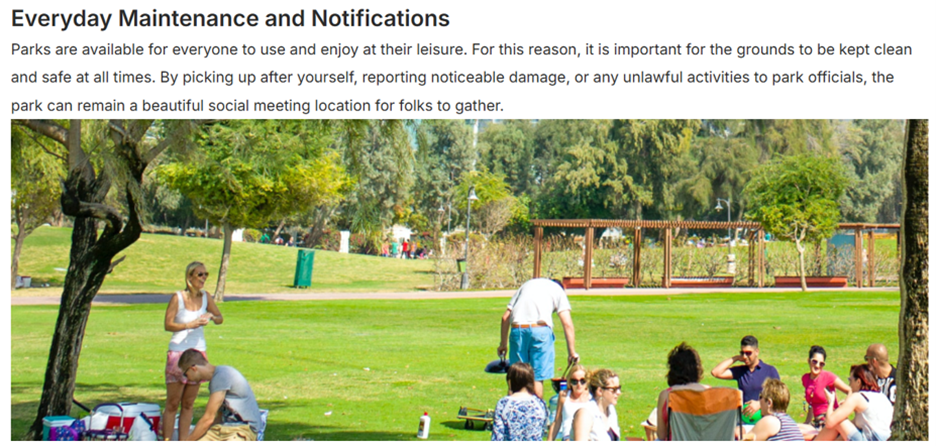
Shared space requires everyday maintenance. Keep our political space safe for everyone.
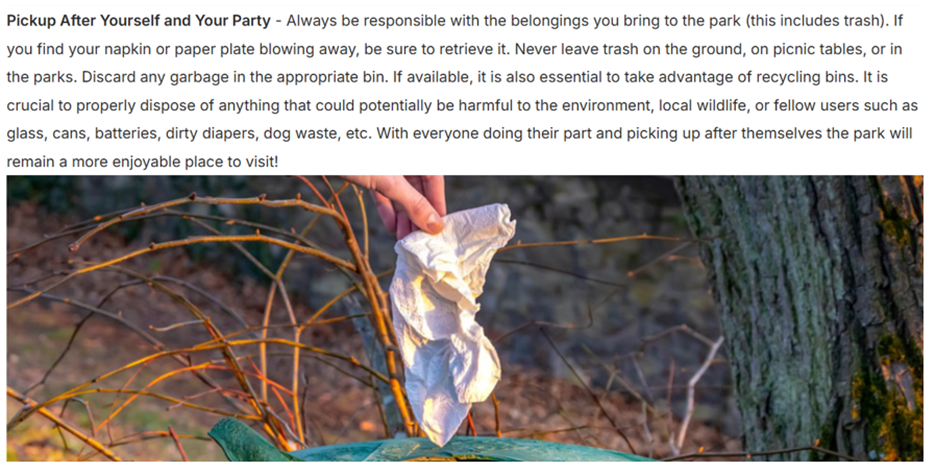
Don’t pollute our shared political space. Don’t do anything in our shared political space that could hurt others. Be respectful of our shared space.
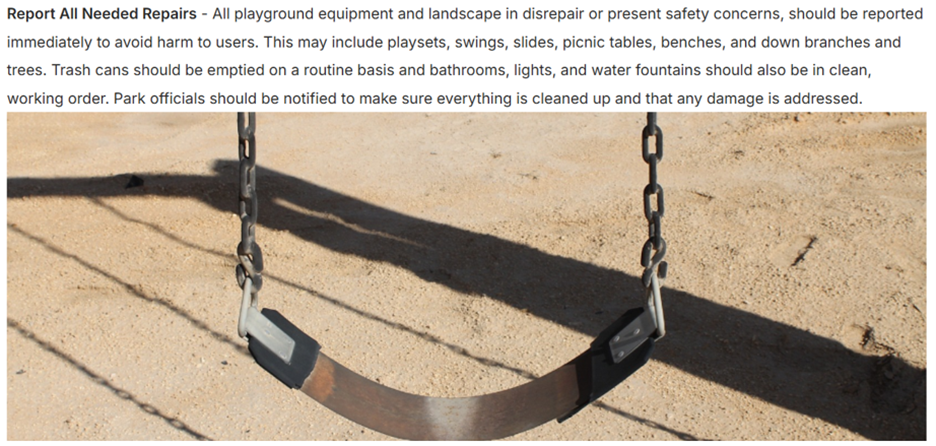
Report failures and problems. Don’t ignore hateful or dangerous speech. If you see a comment or post on social media that degrades our shared space, that makes our shared space less open or makes it threatening, call it out. You can support stronger immigration policies without calling entire groups of people degrading names or being a racist. At the same time, recognize that sometimes you might overstep. All of us have stepped off a path to take a picture, we've probably dropped something. People are imperfect. Listen and allow yourself to learn. Come to politics as you come to a hike.
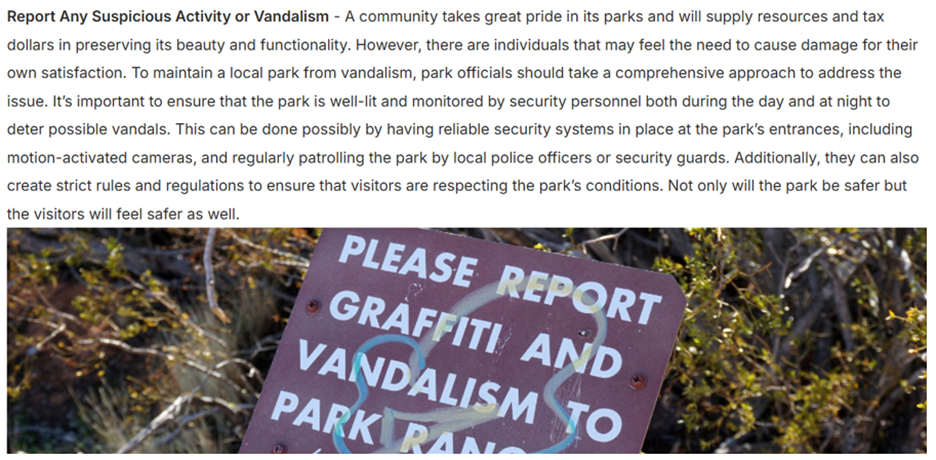
Encourage those in charge of political space - social media companies, mayors, people running meetings or hosting events, to set and enforce rules about appropriate behavior.
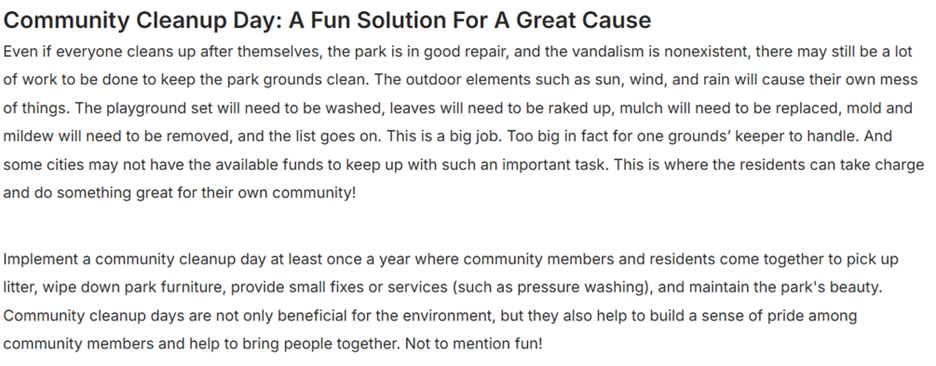
Find ways to bring people together. This is the civility piece. Find common ground or common cause. See each other as people first and partisans second, or third, or ninth. Our political space, like our parks and other public places, are ours. As such, we should take care of them.
There is one rule you should absolutely violate.
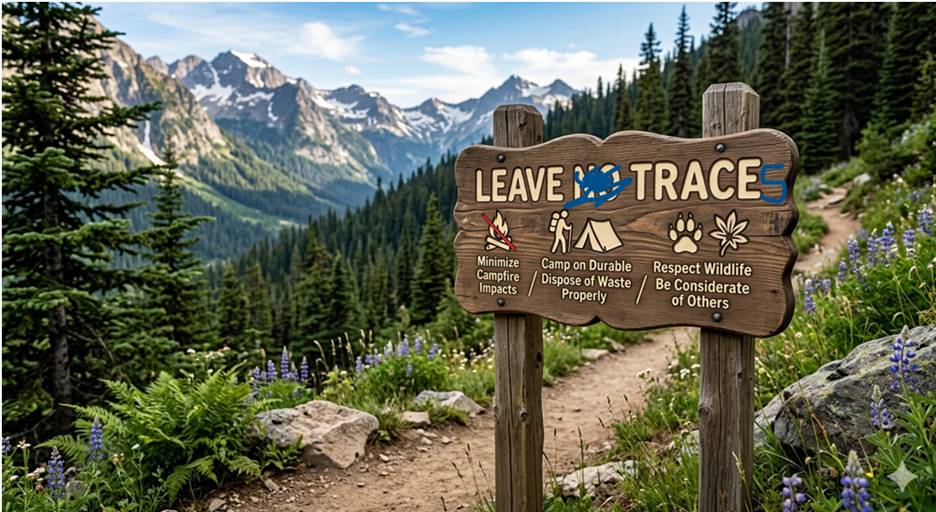
You should absolutely leave traces. That’s the point of politics. But leave traces in ways that make politics stronger rather than weaker. Add to our shared political community, don't carve it up for your own gain or satisfaction. Leave traces that move us toward a politics of respect, integrity, and inclusiveness.
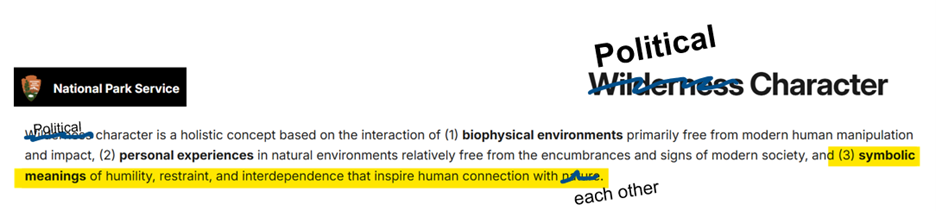
Wilderness character inspires human connection with nature. Political character inspires human connection with each other. We have an obligation to take care of both.
So,

